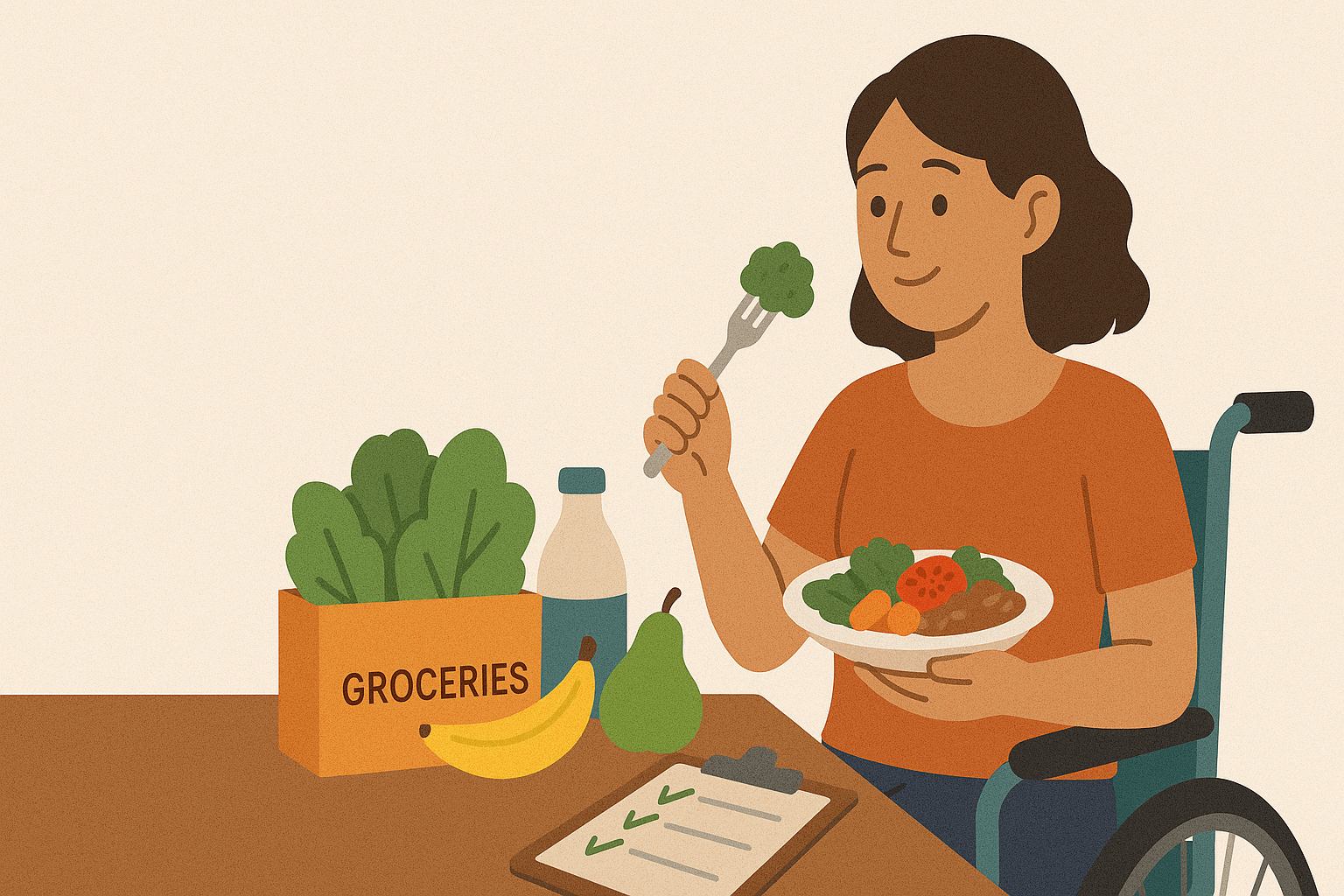
NDIS participants often hear nutrition tips that emphasise healthy eating, but many people think a nutritious diet costs too much. This belief doesn’t match reality at all. Your dollar needs to stretch further as living costs continue to rise.
This piece shares budget-friendly NDIS nutrition tips that can help you cut food costs while maintaining quality meals. Our NDIS tip sheet looks at nutrition from a money-saving point of view because NDIS participants need good nutrition to thrive. Smart shopping and careful meal planning can change your eating habits while keeping your budget in check. These strategies will help you eat well without overspending, whether you plan your own meals or work with an NDIS dietitian.
Smart Grocery Habits for NDIS Participants
Smart grocery habits are the foundations of budget-conscious nutrition for NDIS participants. These practical strategies will reshape the scene of your shopping trips and help you save money on food.
Plan your weekly meals and make a list
A meal plan takes away daily stress and helps you eat healthy food consistently. You should check your pantry and fridge before going to the shops to avoid buying things you don’t need. A flexible weekly meal chart can guide you without being too strict:
- Monday: One-pan dishes
- Tuesday: Pasta night
- Wednesday: Slow cooker meals
- Thursday: Stir-fry
- Friday: Leftovers
A well-laid-out shopping list keeps you from buying unhealthy items on impulse. You can organise your list by food groups since stores usually arrange items this way.
Buy in bulk and compare unit prices
Buying larger amounts of staples you keep taking can save you money as time goes by. Many grocers have bulk bins for grains, nuts, and dried fruits that cost less per unit than packaged options.
Shelf labels show unit prices that help you make economical decisions. This simple habit lets you compare products by showing cost per weight or volume, so you can see the real value beyond the price tag.
Choose seasonal and local produce
Seasonal fruits and vegetables are cheaper and taste better. Buying in-season produce will give a better nutritional value for your money. You can find fresh, seasonal produce at farmers markets for less than supermarket prices, especially if you shop near closing time when vendors want to clear their stock.
Use store brands and discount programmes
Store-brand products match big-name brands in quality and nutrition but cost way less. It also helps to use weekly specials, loyalty programmes, and discounts to save more on groceries.
Don’t overlook frozen and canned options
Frozen and canned foods last longer and cost less than fresh ones while keeping their nutritional value. These choices cut down on food waste, which makes up more than a third of Australia’s home-generated waste. This means both environmental and economic benefits for shoppers watching their budget.
Meal Planning That Saves Time and Money
Meal planning ranks among the most practical NDIS tips that help participants optimise their budget and nutrition. Smart preparation can reduce costs and save precious time throughout the week.
Batch cook and freeze meals
Pick one day every fortnight to prepare large quantities of your favourite dishes. This creates a ready supply of meals you can eat anytime. Start with dishes that freeze well – vegetable lasagne, chicken curry, shepherd’s pie, bean chilli, and hearty stews. Each container needs a label showing the date and portion size. This method helps when your energy levels change, because you’ll always find something nutritious to eat.
Use overlapping ingredients across meals
Smart NDIS nutrition planning means choosing recipes that share common ingredients without making meals feel repetitive. This strategy cuts waste and grocery costs. A burrito night followed by fajitas lets you prep all your onions and peppers at once. You can also plan different cuisine styles using avocado, cilantro, and tomatoes to create variety while using ingredients fully.
Rotate simple recipes to avoid boredom
Long-term nutritional success depends on variety. Different spices and herbs can turn basic ingredients into exciting new dishes. A rotating meal schedule with diverse cuisine styles throughout the week keeps things interesting. This prevents the tiredness that comes from eating the same foods, and you’ll stay excited about cooking at home.
Prep ingredients in advance for the week
Breaking food preparation into smaller tasks makes cooking easier. Cut vegetables and store them in containers, prepare grains like rice or quinoa in batches, create smoothie bags that just need liquid, or marinate and freeze proteins in portions. This reduces daily decisions and makes cooking more manageable. This NDIS tip works well if you have limited energy or mobility challenges.
Affordable, Nutritious Meal Ideas
Budget-friendly meal ideas are a great way to get NDIS tips for managing daily nutrition needs. Here are some practical meal ideas that won’t break your budget while keeping your nutrition on track.
Budget-friendly breakfast options
You don’t need expensive ingredients to start your day right. Microwave scrambled eggs make a quick, protein-rich breakfast without stovetop cooking. Just mix eggs with milk, microwave in 30-second intervals and dig in. Another time-saving option is overnight oats – combine oats with milk before bed and add banana slices or honey in the morning. Fruit-topped yoghurt bowls work great for people with limited mobility since they need minimal prep.
Protein-rich lunches using legumes and grains
Legumes give you the best mix of value and nutrition. Lentil salads pack plenty of protein and let you add seasonal vegetables. Try brown lentils with feta, tomatoes, cucumber and a lemon-oregano dressing. Chickpea salad makes a tasty sandwich filling when you mix mashed chickpeas with walnuts, dried cranberries and fresh herbs. Rice bowls topped with edamame or beans give you another easy option that needs little prep.
One-pan dinners with seasonal vegetables
Sheet pan meals make cooking easier and cleanup faster. A tray of salmon with chickpeas, broccoli and carrots creates a complete meal without much work. Sweet potato, broccoli and zucchini with chickpeas give you plant-based options. Spinach and lentil dhal serves up iron-rich comfort food that costs very little.
Healthy snacks that won’t break the bank
You can snack smart without spending much. Roasted chickpeas turn into crunchy, protein-rich treats with just a few ingredients. Peanut butter protein balls give you affordable nutrition with a sweet touch. Greek yoghurt with fruit provides calcium and probiotics without expensive add-ins. Even simple pairings like cheese cubes and fresh fruit create balanced mini-meals that keep your energy up throughout the day.
These NDIS nutrition strategies show that eating well on a budget is more than possible – it just takes some smart planning and the right ingredients.
Time-Saving Cooking Tips for Busy Days
Cooking meals can be challenging when you have limited energy or mobility as an NDIS participant. These practical NDIS tips will help you cook delicious meals without having to stand for long periods.
Use slow cookers and instant pots
Electric cooking appliances are a great way to cook when you have disabilities. Slow cookers need very little prep work – just add your ingredients in the morning and come back to a ready meal later. You won’t need to stand at the stove, which saves your energy. If you want your food faster, Instant Pots work just as well with “dump and go” recipes that need minimal steps.
Try one-tray oven meals
One-tray bakes are maybe even the best NDIS nutrition hack. You’ll only need a single baking sheet to make complete meals, which means less prep time and fewer dishes to wash. Chicken thighs with veggies, salmon with chickpeas, or veggie meals with sweet potato and broccoli make balanced dishes without much effort. These traybakes also cost nowhere near as much as takeaway food.
Simplify recipes with fewer ingredients
Look for recipes that need five ingredients or less. Frozen pre-chopped vegetables save you from all that slicing, and pre-peeled garlic adds flavour without the fussy prep work. Keep 5-7 simple meals in rotation to avoid feeling overwhelmed on tough days.
Make cooking enjoyable with music or podcasts
Turn cooking into something fun with entertainment. Playing music or podcasts in the background helps make meal prep feel more relaxed and enjoyable – this NDIS tip sheet strategy helps build lasting habits.
Conclusion
NDIS participants can eat nutritiously whatever their budget constraints. Simple strategies can revolutionise your food approach without breaking the bank. Planning ahead serves as the life-blood of budget-friendly nutrition – from weekly meal plans to smart shopping lists and batch cooking sessions.
Bulk purchasing, seasonal shopping, and store brand selection create substantial savings over time. On top of that, frozen and canned foods provide excellent nutritional value while stretching your food budget. These practical habits become second nature and help stretch your NDIS funds substantially.
Meal preparation doesn’t have to be overwhelming. One-tray bakes, slow cooker meals, and simple recipes with minimal ingredients keep people fed without requiring excessive standing time or energy. Cooking can become an enjoyable activity rather than a chore with your favourite music or engaging podcasts playing in the background.
Smart grocery habits combined with thoughtful meal planning create an eco-friendly approach to nutrition that boosts your overall wellbeing. These practical tips will equip you to make confident food choices that nourish your body and budget. Good nutrition is the foundation for living well as an NDIS participant – and this foundation doesn’t need to cost a fortune.
FAQs
Q1. How can NDIS participants save money on groceries without compromising nutrition? NDIS participants can save money by planning weekly meals, buying in bulk, choosing seasonal produce, using store brands, and considering frozen or canned options. These strategies help reduce costs while maintaining nutritional value.
Q2. What are some time-saving cooking methods for those with limited energy or mobility? Using slow cookers or instant pots, preparing one-tray oven meals, and simplifying recipes with fewer ingredients are excellent time-saving cooking methods. These approaches minimise standing time and effort while still producing delicious, nutritious meals.
Q3. Are there affordable protein sources for budget-conscious NDIS participants? Yes, legumes like lentils and chickpeas are excellent affordable protein sources. They can be used in various dishes such as salads, sandwiches, and one-pot meals, providing both nutrition and cost-effectiveness.
Q4. How can meal planning help NDIS participants eat well on a budget? Meal planning helps by reducing food waste, allowing for bulk purchasing, and ensuring a variety of nutritious meals throughout the week. It also saves time and reduces the stress of daily meal decisions.
Q5. What are some quick and healthy breakfast options for NDIS participants? Microwave scrambled eggs, overnight oats, and fruit-topped yoghurt bowls are quick, healthy breakfast options. These meals are easy to prepare, nutritious, and can be adapted to individual tastes and dietary needs.